Many illnesses begin long before a patient reaches a hospital. Diet, sanitation, education, housing, occupational exposure, access to screening, and health beliefs all influence disease patterns. Community medicine teaches future doctors to see these upstream causes.
Prevention Is Clinical Work
Screening for hypertension, counseling about tobacco, promoting vaccination, discussing nutrition, and explaining warning signs can prevent complications that are far harder to treat later.
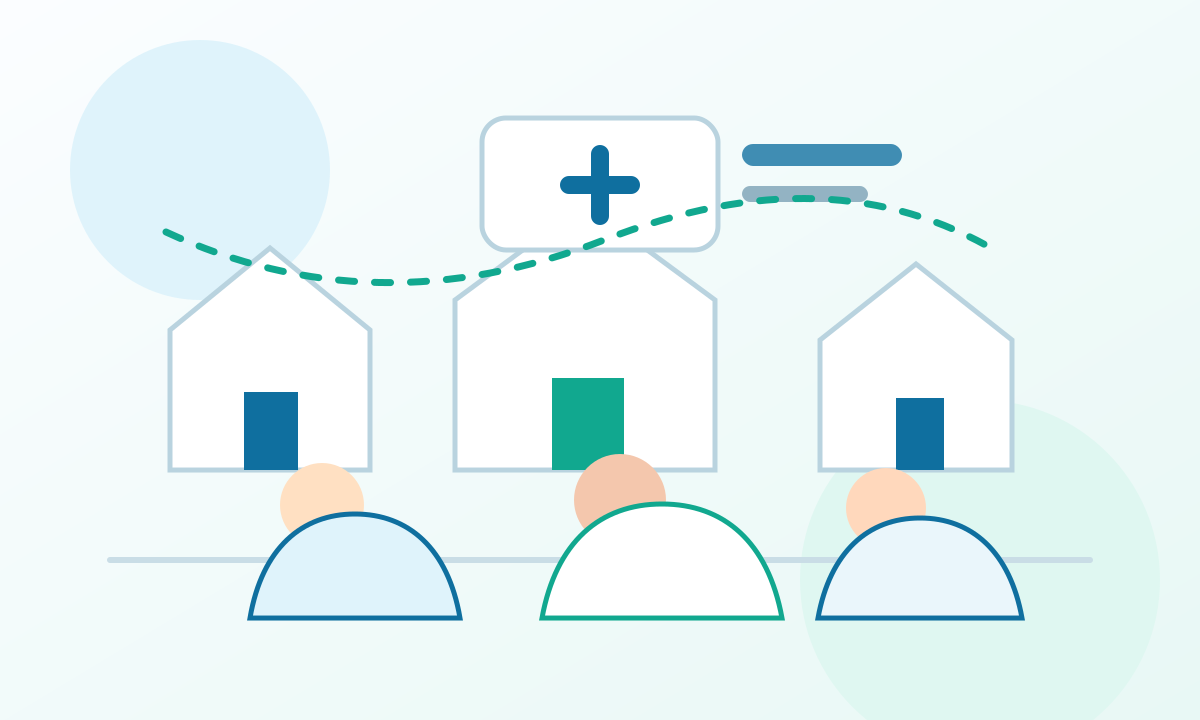
Health Education Must Be Practical
Advice works best when it fits the patient's reality. A recommendation should consider cost, family support, local food options, work schedule, literacy, and follow-up access.
For example, telling a patient to eat healthier is less useful than discussing affordable local meals, salt reduction, portion size, cooking oil, and realistic walking routines. Community medicine asks doctors to translate science into choices people can actually make.
Student Involvement Matters
Medical students can support awareness campaigns, assist supervised screening, prepare patient-friendly materials, and learn from community health workers who understand local barriers deeply.
Prevent disease before it starts through vaccines, education, sanitation, nutrition, and healthy habits.
Find disease early through screening, risk assessment, and timely referral.
Leadership and Advocacy
Programs such as YALC 2024 encourage young people to understand advocacy, communication, and community priorities. For a future doctor, this kind of leadership experience can strengthen the ability to listen, organize, and speak clearly about health issues that affect young people.
- Ask about context, not just symptoms.
- Use local language and simple examples.
- Measure impact through follow-up and reflection.
- Respect community voices when designing awareness activities.